
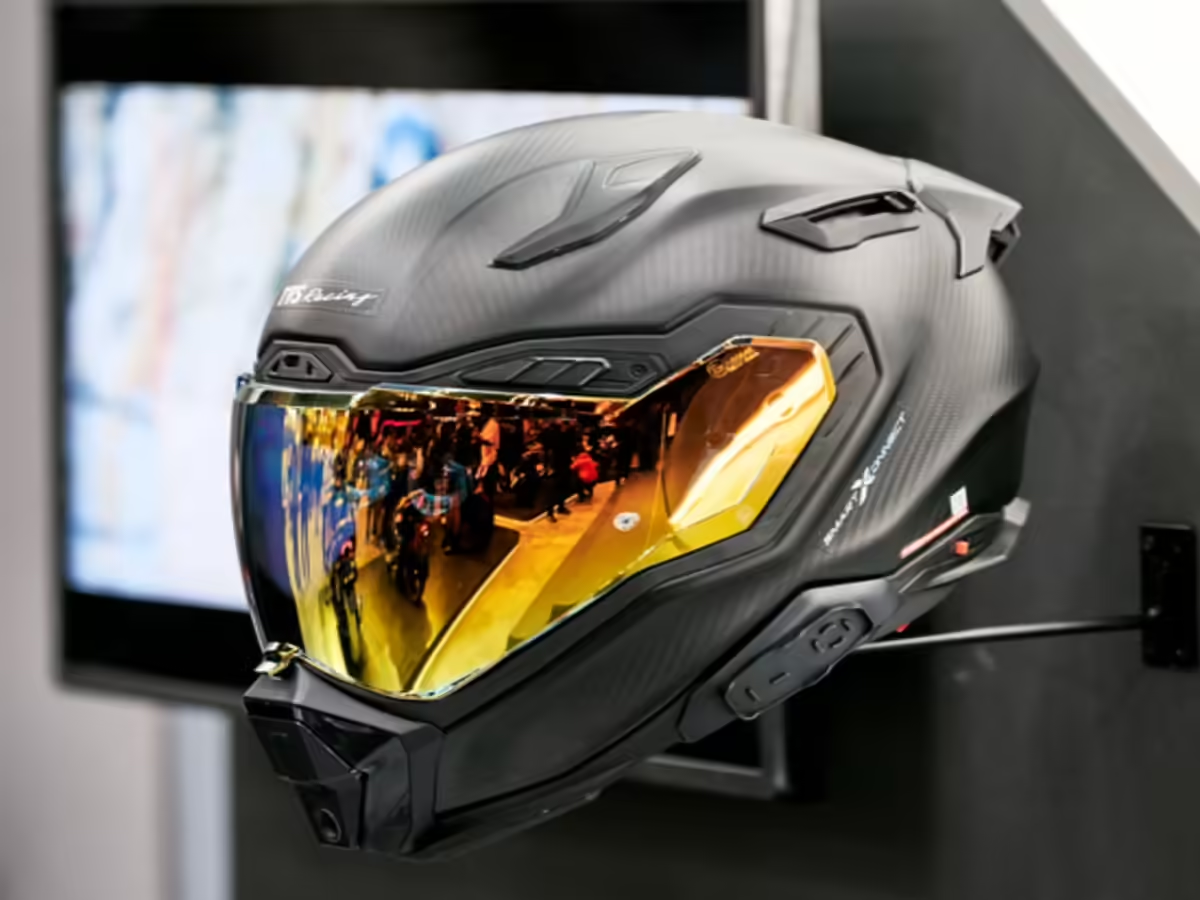
Riding a motorcycle in 2025 may soon feel a lot like driving a futuristic vehicle — thanks to innovations like the TVS AR Helmet. Unveiled recently by TVS Motor Company in collaboration with Swiss startup Aegis Rider at the global two-wheeler expo EICMA 2025, this helmet seeks to transcend typical headgear by embedding real-time data, navigation, connectivity and safety into a sleek, ride-ready package.
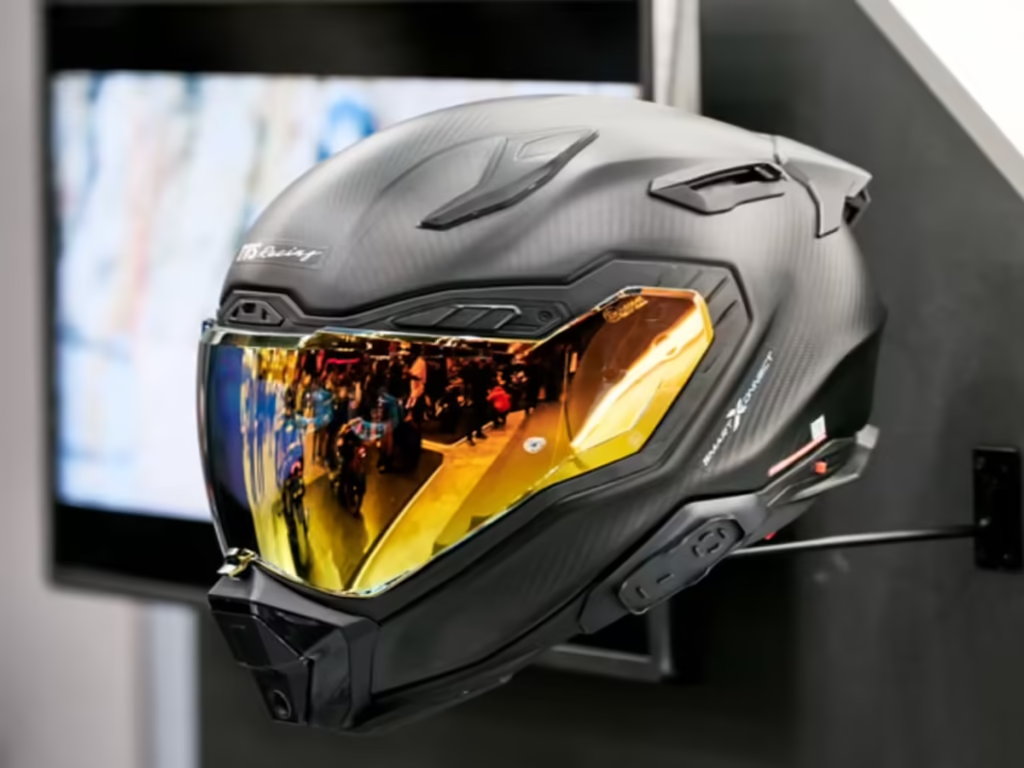
In this in-depth blog, we dive into what makes this AR Helmet an exciting leap forward — and also the challenges it carries. Whether you’re a daily commuter in Lucknow, a weekend tourer, or simply a tech-savvy rider, this full review will help you understand whether this smart helmet is truly worth your investment.
What is the TVS AR Helmet?
The TVS AR Helmet isn’t just any helmet — it’s a “smart helmet,” blending traditional safety gear with augmented reality (AR), making it part of the connected-mobility future.
- Heads-Up Display (HUD) + AR integration: Instead of forcing you to glance down at a phone or instrument cluster, the helmet projects critical information (speed, navigation cues, hazard warnings, call/message alerts) directly into your field of view — on the visor itself.
- Spatial anchoring: The projected information remains steady relative to the bike, not your head movement. This makes sure data doesn’t float or shift around, which is crucial while riding.
- Smart connectivity: The helmet can connect wirelessly to your bike’s infotainment system or smartphone — enabling navigation, calls, music control, notifications and more.
- Additional features: There’s a 5-megapixel integrated action camera, allowing you to record your rides. Also, the helmet boasts adaptive brightness and anti-glare capabilities for visibility under different light conditions.
In short: It’s a helmet that aims to act like your dashboard + smartphone + safety gear — all in one.
Technical Specifications & Features
Here’s a breakdown of what’s inside and what you get with the TVS AR Helmet:
| Specification / Feature | Details / Benefit |
|---|---|
| Shell Material | Carbon-fibre shell — strong yet lightweight. |
| Display Type | µOLED projector + magnetic binocular AR glass. |
| Display Adjustments | Adaptive brightness + anti-glare — for visibility in bright sunlight or night rides. |
| Battery | 7,000 mAh rechargeable battery. |
| Battery Life | Around 4 hours of continuous operation. |
| Connectivity | Wireless connection with motorcycle infotainment or smartphone. |
| Information Displayed | Navigation (maps, turn-by-turn), speed, hazard alerts, calls/messages, music controls. Further integration (with compatible bikes) promises data like RPM, fuel level, gear position, turn signals. |
| Safety Certifications | Meets global standards — both ECE 22.06 and DOT certified. |
| Extra | Integrated 5 MP action camera for ride recording / video documentation. |
From a technical standpoint, the TVS AR Helmet is more than just a concept — it’s a working, functional wearable tech. For riders, this could mean fewer distractions, more convenience, and safer rides.
Pros — What Works (or Could Work) Very Well
1. Safety & Focus: Eyes on the Road
One of the key advantages of AR helmet technology is that it allows riders to get vital information without taking their eyes off the road. Speed, navigation prompts, and hazard warnings are visible in your field of view. For busy city traffic — like in Lucknow — this could greatly reduce risky glances down at phones or dashboards.
2. Convenience: Dashboard + Smartphone in the Helmet
Forget about mounting a phone, glancing down for navigation, or dealing with wires and mounts — all essential ride and communication data can be displayed directly inside the helmet. That’s convenience and simplicity combined.
3. Riding Data + Connectivity + Recording
With connectivity to your bike or smartphone, integrated camera, and comprehensive data display (speed, RPM, fuel level, gear shift etc. for compatible bikes), this helmet tries to deliver a one-stop “smart ride hub.”
4. Global Safety Standards
Since it’s ECE 22.06 and DOT certified, this helmet aims to meet rigorous global safety standards — which adds trustworthiness, especially compared to random aftermarket gadgets.
5. Built for Real Riding Conditions
With adaptive brightness, anti-glare display, carbon-fiber shell, and reasonable battery capacity — the design seems quite well thought-out for different lighting and riding conditions (day, night, urban, touring).
Cons & Potential Drawbacks — What to Watch Out For
Of course, as with any cutting-edge product, there are tradeoffs and challenges.
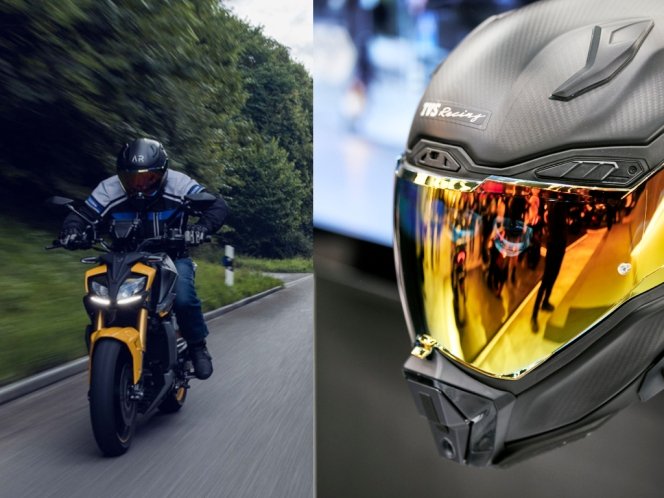
Battery Life — Limited to ~4 Hours
At around four hours of continuous use, the helmet’s battery life may be insufficient for long rides or day-long touring, unless recharged during stops.
Added Complexity and Distraction Risk
While HUDs are designed to reduce distraction, there is also a risk: uncluttered or improperly managed HUD displays might become a source of distraction themselves. Critics — including in a recent review — have voiced concerns about “too much technology between you and the road.”
Cost, Availability and Practicality
Though exact retail pricing for India isn’t available yet (or widely publicized), smart helmets tend to come at a premium. For many riders in India, especially budget-conscious ones, the cost might be high. Further, integration with bike infotainment systems may be more seamless with certain bikes — not universal.
Weight & Fit Comfort
Adding AR glass, processor, battery and camera could increase helmet weight — potentially making it heavier than standard helmets. This may impact comfort during longer rides, though TVS claims to use carbon-fibre shell to mitigate weight.
Real-World Durability & User Experience Still Unproven
Since this helmet is newly unveiled and not yet widely in use (as of end-2025), long-term reliability, battery degradation, repair/maintenance and real-world user experience (especially in heavy Indian traffic and weather conditions) remain to be tested by end-users.
What This Means for Indian Riders (Like You)
As a rider in India — maybe navigating busy lanes, chaotic traffic, and frequent stops — the TVS AR Helmet could offer several tangible advantages:
- Urban commutes — Heads-up navigation and quick alerts can help you stay focused on the road.
- City-to-city touring — The integrated navigation + ride data + recording features could make long rides simpler and safer.
- Safety first lifestyle — If you value constant awareness and connectivity (calls, notifications, hazards), this helmet is aligned with a more “tech-integrated” riding style.
- Early adopter appeal — For those excited about gadgets and futuristic riding gear, owning a smart ARR helmet is a strong status and utility symbol.
However, for riders on a tighter budget, or those who prefer minimalism and traditional helmets, it might feel over-engineered or expensive.
Verdict: Is TVS AR Helmet Worth It?
My assessment: Yes, with caveats. The TVS AR Helmet represents a bold and promising leap into smart mobility. It genuinely offers features that — if executed well — can enhance rider safety, convenience, and connectivity. For tech-savvy riders, frequent commuters, or touring enthusiasts, the benefits could outweigh the downsides.
But it’s also not a drop-in replacement for every rider’s needs yet. Battery life, potential distraction, cost, and real-world usability — especially in Indian conditions — remain open questions.
If you’re keen on embracing the future of riding, this helmet is worth serious consideration. If you prefer traditional simplicity or long-distance reliability, you might want to wait for real-world reviews or a lighter/longer-lasting variant.
Final Thoughts & What to Watch Next
- The AR helmet points to a future where helmets are not just protective gear, but smart devices — potentially reshaping how we ride.
- Over time, with feedback and iteration — especially in diverse markets like India — such helmets may get more optimized: better batteries, lighter weight, localized language support, deeper bike integration.
- As a rider in Lucknow (or any Indian city), you should watch for official launch details from TVS, pricing for India, and real-world user reviews before adopting it.
- If you ride regularly — city or highway — this helmet could be a strong upgrade. If you ride occasionally or value simplicity, standard helmets may continue to suffice.