

When a luxury car brand known for sleek sedans and stylish SUVs unexpectedly shows a mid-engine, V8-powered supercar concept, it’s bound to turn heads. That’s exactly what Genesis — the premium division of Hyundai Motor Company — has done with the recently unveiled Genesis Magma GT Concept. Revealed in late 2025, the Magma GT isn’t just another concept; it’s a bold statement of intent. It signals Genesis’s entry into high-performance, motorsport-inspired supercars.

In this in-depth blog, we explore what the Magma GT is, why it matters, what we know so far (and what remains uncertain), who it may appeal to — and what it means for the future of performance cars from Genesis.
What is the Genesis Magma GT?
The Genesis Magma GT is a concept supercar with strong ambitions — not merely a design exercise but a possible halo model that could define the brand’s “Magma” performance sub-brand for the next decade.
Genesis + Magma: A New Performance Direction
- Genesis, historically known for luxury saloons and SUVs, is launching a dedicated performance-oriented sub-brand called “Magma”. The Magma GT is the first “pure sports-car typology” under this sub-brand — essentially their take on what a modern supercar should be.
- The GT stands as a “halo” or flagship model — a car meant to embody everything Magma stands for: performance, elegance, and ambition.
Design & Layout
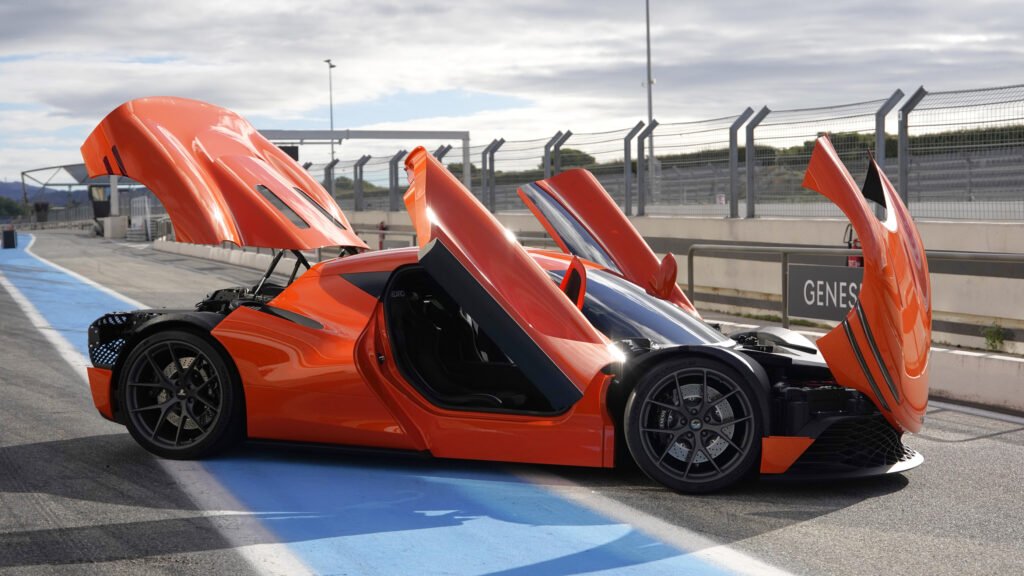
- The Magma GT Concept is a two-door, two-seater supercar with a mid-rear engine layout — classic supercar proportions: low hood, sweeping roofline and muscular rear haunches.
- The styling follows Genesis’s “Athletic Elegance” philosophy but pushed to the extreme — wide fenders, aggressive stance, aerodynamic contours, and a silhouette built for speed and balance.
- According to the company, every line, every surface of the Magma GT is tuned for aerodynamic efficiency and optimized driving dynamics, rather than flamboyant showiness.
Purpose — More than a Concept
- The Magma GT isn’t just for show. Genesis hinted that the concept could eventually be developed into a road-goable production model after 2027, albeit possibly with some styling and regulatory changes.
- Beyond road use, Genesis has motorsport ambitions — the Magma GT is part of a larger plan to compete in GT racing series (such as GT3), which explains the mid-engine layout, performance-first design, and possibility of homologation versions for teams.
In short — the Magma GT represents Genesis’s transformation from a luxury-car maker to a brand serious about performance and motorsport pedigree.
What We Know So Far: Specs & Promises
Because the Magma GT is still a concept, technical data is limited. However, public statements and initial reports give us a clear view of what Genesis hopes to deliver.
Engine & Performance (Planned)
- The Magma GT is expected to use a twin-turbocharged V8 engine, likely derived from the powerplant used in the brand’s race-car Genesis GMR-001 (developed for the 2026 endurance racing season).
- While exact power output and torque numbers have not been disclosed, reports suggest the car — if production-ready — will easily match or surpass high-performance supercar benchmarks, possibly exceeding 600 hp.
- The likely power delivery setup: rear-wheel drive, via an 8-speed dual-clutch transmission.
- Some reports also hint at hybrid or electrified assist — to meet emissions and regulatory norms while offering performance flexibility (though nothing is confirmed publicly yet).
Chassis & Dynamics
- The production-version Magma GT is expected to adopt an aluminum monocoque chassis, which provides a balance of rigidity, safety, and cost-effectiveness (compared to exotic carbon-fibre).
- The mid-rear engine layout, wide track, and aggressive aerodynamics (as previewed in the concept) suggest the car will be tuned for balanced handling, stability at speed, and optimal driver feedback — not just sheer straight-line speed.
- According to Genesis’s own words: “Magma GT won’t ask the driver to prove their skill — it enhances it.” It’s meant to be a supercar that’s usable, approachable, and refined, not a raw, unfiltered beast.
What We Don’t Know Yet
- Official performance numbers (hp, torque, top speed, acceleration) have not been revealed.
- Interior details — seating, comfort amenities, infotainment or luxury trimmings — remain almost entirely under wraps.
- Whether a production version will remain true to the concept’s aggressive styling or be toned down for road legality, regulation compliance, and broader usability.
- Launch date, price range, global availability — especially considering emissions regulation, homologation, and production viability.
Why Genesis Magma GT Matters — Bigger Picture
Why does the reveal of Magma GT matter in the larger automotive and luxury-car world? Here are the broader implications.
Genesis Reinvents Its Identity
Genesis has, until now, mostly competed in the luxury sedan/SUV market — offering refined cars focused on comfort and elegance rather than raw performance. The Magma GT flips that narrative. It shows that Genesis wants to be taken seriously as a performance car maker — not just a luxury-branding exercise.
This is more than a model reveal. It’s a statement of intent: Genesis aims to blend luxury + performance + motorsport influence. That could change how the brand is perceived globally — especially in markets where performance and supercars are aspirational.
Motorsport Ambitions: Road to Racing
With the Magma GT — plus their race-car GMR-001 and their official racing outfit Genesis Magma Racing — Genesis isn’t just flirting with racing; it’s preparing to compete. GT3-class homologation, Le Mans aspirations, track-focused variants — this could mark the start of a serious motorsport legacy for a brand that stood in luxury.
A New “Halo” Car Philosophy — From SUVs to Supercars
Many brands use halo cars to elevate their image (think Porsche 911 for Volkswagen-derived brands, Ferrari 488 for Ferrari, AMG GT for Mercedes-derived AMG). The Magma GT could be Genesis’s halo — the car that makes people look twice at the badge, pushes brand desirability, and changes market perception.
With a likely production version expected after 2027, it could open doors for future performance-oriented cars under the Magma sub-brand — possibly even tractable for everyday buyers, depending on trim, variant, and positioning.
Who Is the Magma GT For — Potential Buyers & Fans
The Magma GT is not designed for everyone. But for a certain kind of car enthusiast — here’s why it may appeal:
- Performance-oriented luxury buyers: People who want more than comfort. They want a supercar that also carries a badge of prestige and design sensibility.
- Motorsport and track lovers: Given Genesis’s aim for GT racing homologation, the GT could appeal to those interested in track days, racing, or performance-oriented driving experience.
- Car collectors and enthusiasts: Early adopters, collectors, or those seeking something rare — a mid-engine V8 supercar from a Korean luxury brand is rare and could appreciate in value or prestige.
- Brand loyalists & curious buyers: Fans of Genesis / Hyundai who want to see what the brand can do when freed from typical sedan/SUV constraints — and are open to experiments in design and performance.
If you’re expecting a practical daily driver, an affordable commuter, or a family-friendly car — Magma GT (especially the concept) isn’t it. This is a supercar aspirant, built for thrill, performance and exclusivity.
Challenges & Risks — What Could Go Wrong
Of course, with high ambition come high risks. The Magma GT faces a few significant hurdles before it becomes a feasible production car or a successful supercar.
- Regulatory and emissions constraints: A twin-turbo V8 supercar may face strict emissions and homologation requirements, depending on region — could force compromises like hybridization, detuning, or limited markets.
- Cost and pricing: As a halo supercar, it’s unlikely to be cheap. Cost of development, manufacturing, homologation, and exclusivity could put price out of reach for many potential buyers.
- Production viability and volume: Supercars often have low production volumes. Genesis must balance exclusivity with profitability — and demand may be uncertain.
- Usability vs. performance tradeoffs: High-performance cars often sacrifice comfort, ride quality, fuel economy, and practicality. For many traditional Genesis buyers, that may be a step down from expected luxury comfort.
- Brand identity shift risk: Genesis moving from sedans/SUVs to supercars is bold — but alienating to some conservative buyers expecting luxury and practicality rather than motorsport aggression.
What to Watch Next: What’s Ahead for Magma GT
Here are the key developments to keep an eye on, to know whether Magma GT will remain a dream or become a reality:
- Official specs release — power output, torque, 0–100 km/h acceleration, top speed, fuel/electric/hybrid specs.
- Details on production timeline — when (post-2027, expected) the production Magma GT will be launched; will it be globally available or limited to select markets?
- Variants and trim plans — as hinted by executives, there could be multiple variants: base GT, GT-S, Clubsport, maybe even a roadster or track-optimized version — similar to how some supercar makers expand their halo line.
- Confirmation of GT-class or GT3 homologation — if Genesis reveals officially that Magma GT will be race-eligible (or road-legal homologation model), that would strongly indicate seriousness and long-term commitment.
- Real-world performance and reviews — once driven by journalists, early track tests or even “first owner” impressions will reveal whether Magma GT lives up to its promise — or whether it remains a concept showpiece.
Conclusion: Is Magma GT the Start of a New Era?
The Genesis Magma GT Concept isn’t just a flashy showpiece — it’s a bold manifesto. It signals that Genesis is ready to compete beyond luxury sedans and compete in the world of supercars, performance, and motorsport.
If everything goes according to plan — homologation, production, performance validation — Magma GT could become that rare beast: a Korean-built, V8 mid-engine supercar that blends luxury, performance, and ambition. For car enthusiasts tired of the same names dominating the supercar segment, this could be a breath of fresh air.
But until official specs, price, and a production-ready vehicle are confirmed, Magma GT remains what it currently is: an ambitious concept with great potential — and a big question mark.
For now, it represents hope — hope that Genesis isn’t just another luxury badge, but a serious player in the supercar & motorsport arena.