
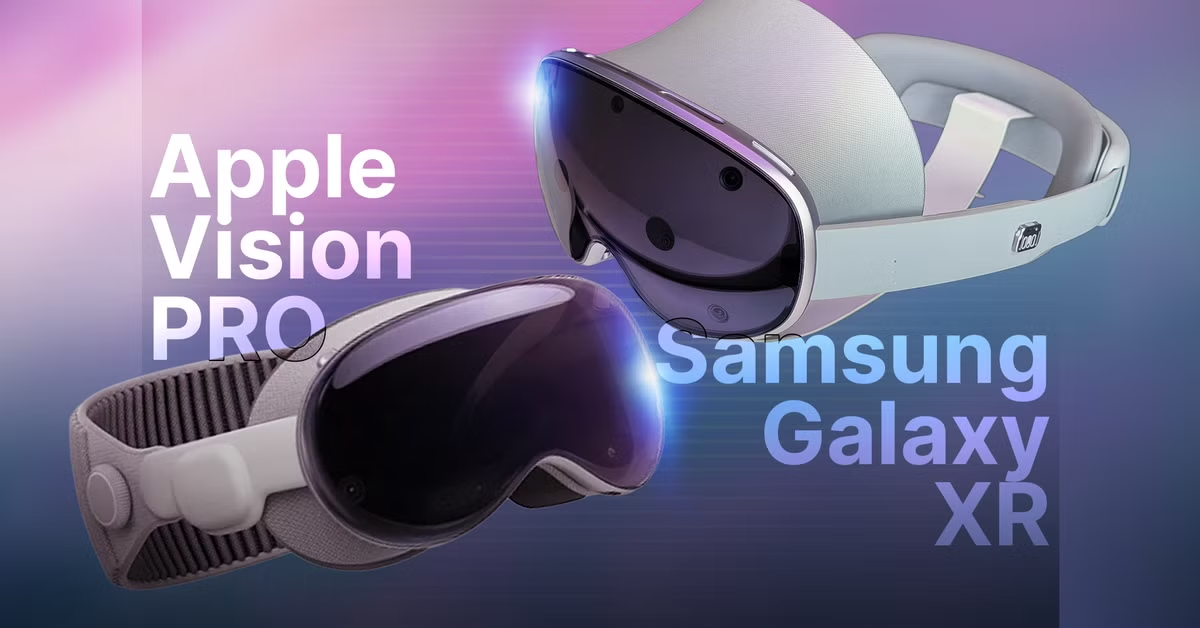
Extended reality (XR) — a combination of virtual reality (VR), augmented reality (AR) and mixed reality (MR) — is no longer a far-off dream. 2025 marks a turning point with major tech giants entering the XR headset race in full force. The rivalry between Samsung and Apple is now visible in the battle between Samsung Galaxy XR and Apple Vision Pro.
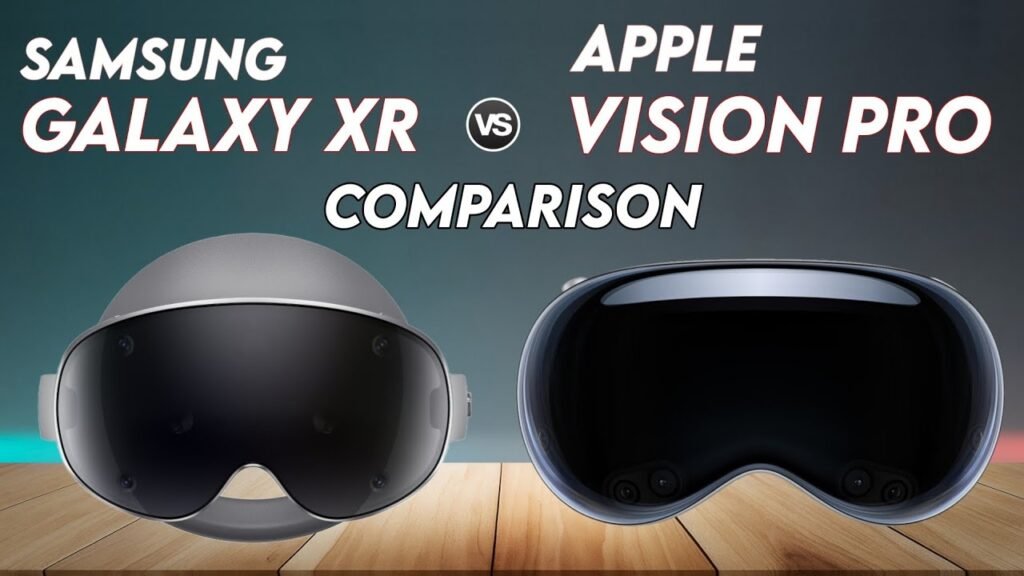
If you’re exploring XR headsets — whether for immersive media, productivity, design, or simply tech-curiosity — this blog gives you a detailed, honest comparison between these two flagship devices. We’ll walk through their features, real-world use, strengths, tradeoffs, and ultimately help you decide which one might suit you better.
What are Galaxy XR & Vision Pro?
Samsung Galaxy XR
Galaxy XR is Samsung’s first serious foray into XR hardware — a mixed-reality headset built in collaboration with Google (leveraging its new Android XR platform).
It aims to deliver immersive XR experiences — VR games, virtual workspaces, 3D media, spatial computing — while staying lighter, more affordable, and more accessible than premium alternatives. According to Samsung, the goal is to make XR a part of everyday tech use, not just niche “enthusiast” hardware.
Apple Vision Pro
Vision Pro — originally launched by Apple in 2024, and now updated with a powerful new chipset — is Apple’s spatial computer: a mixed-reality headset combining high-end hardware, refined software (visionOS), and the Apple ecosystem to deliver what Apple positions as “the future of computing.”
With advanced displays, eye- and hand-tracking, spatial audio, passthrough cameras, and seamless integration with Apple devices and services — Vision Pro represents the “luxury premium” end of XR headsets.
Core Specifications & Features — Side by Side
Let’s compare what each device packs under the hood (or on your head), to understand where they compete and where they diverge.
Technical Spec Comparison
| Feature / Spec | Samsung Galaxy XR | Apple Vision Pro |
|---|---|---|
| Display | Dual 4K Micro-OLED, ~ 3,552 × 3,840 per eye (~27–29M total pixels), 6.3 µm pixel pitch | Dual Micro-OLED, ~ 3,660 × 3,200 per eye (~23M pixels total) |
| Refresh Rate | Up to 90 Hz | Up to 120 Hz (with newer M5 model) |
| Field of View (FOV) | ~ 109° horizontal × 100° vertical | ~ 100–110° horizontal (varies by version) |
| Processor | Qualcomm Snapdragon XR2+ Gen 2 | Apple M5 (with 10-core CPU & GPU + Neural Engine) |
| RAM / Storage | 16 GB RAM, 256 GB Storage | 16 GB RAM, 256 GB up to 1 TB Storage |
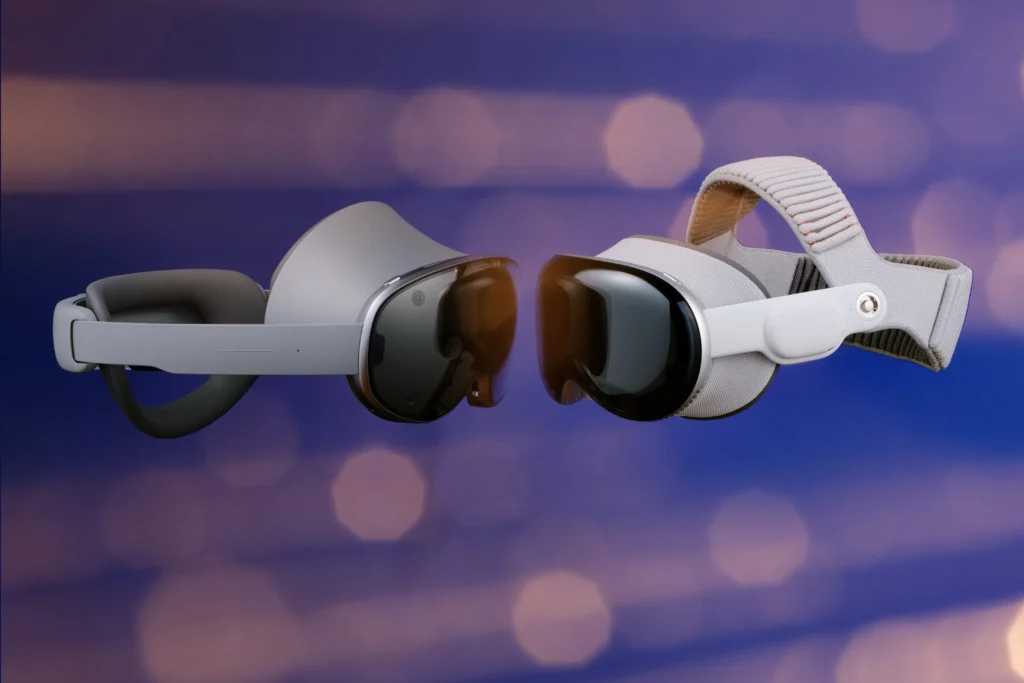
| Weight & Comfort | Approx. 545 g (headset only), lighter build thanks to plastic chassis | Heavier — depending on version, 600–800 g (M5 model heavier) owing to aluminium & robust build |
| Tracking & Sensors | Eye and hand tracking, passthrough + world-tracking cameras, depth sensors, support for gestures & voice control | Eye & hand tracking, passthrough cameras, depth sensors, iris recognition for unlocking, advanced spatial trackingApple+1 |
| Operating System | Android XR (with Google / Samsung enhancements) | visionOS (Apple’s proprietary XR OS) |
| Price (USD, base model) | ~$1,799–1,800 | ~$3,499 (base model) |
What Each Headset Does Well — Strengths & Advantages
Where Galaxy XR Excels
- Affordability and Value for Money – At roughly half the price of Vision Pro, Galaxy XR offers much of the same “XR experience” without burning a huge hole in your pocket. For many users, that price difference alone could make the decision.
- Lightweight, Comfortable Wear – Its lighter build (plastic chassis, lighter weight) makes longer XR sessions more comfortable. For people new to XR or sensitive to heavier headsets, this is a significant advantage.
- High-Resolution Display – With very sharp micro-OLED and high pixel count per eye, visual fidelity is excellent — sharp text, detailed 3D graphics, crisp video playback.
- Open Ecosystem & Flexibility – Running Android XR means access to a broader, open ecosystem (compatible with many apps, potentially more flexible integration), plus features like hand/eye/voice input.
- Good All-Rounder for Mixed Use – Whether you want to watch movies in immersive 3D, browse the web, use spatial apps, or experiment with MR/VR — Galaxy XR aims to balance price, performance, and comfort.
Where Apple Vision Pro Shines
- Premium Build & Polished Experience – The aluminium chassis, refined ergonomics, and the integrated Apple ecosystem deliver a “luxury XR” feel. It’s built for users who care about the most polished hardware + software synergy.
- Processing Power & Performance Headroom – The M5 chip (10-core CPU + GPU + Neural Engine) gives Vision Pro robust performance — ideal for heavy workloads: 3D design, high-end spatial computing, pro-level apps, extended multitasking.
- Smoother Motion & Higher Refresh Rate – With up to 120 Hz refresh rate, Vision Pro handles motion smoother — important for immersive VR games, fast-paced visuals, and reducing motion sickness.
- Ecosystem & Software Maturity – Apple’s track record with software polish, app quality, and long-term support could make Vision Pro a more future-proof XR device — especially for users deeply invested in the Apple ecosystem.
Trade-offs & Where Each Falls Short
No device — even cutting-edge XR headsets — is perfect. Here are the compromises or limitations you should know about.
Galaxy XR — What to Watch Out For
- Build Material & Feel — Using a plastic chassis keeps it light, but some users may find it less “premium” or durable compared to metal builds.
- Software & App Maturity – As Android XR is new, the app ecosystem and optimization (especially compared to Apple’s well-established ecosystem) may still lag. Some high-end apps or workflows may remain exclusive to other platforms.
- Battery / External Battery Pack — Some XR headsets (including XR2-based ones) may require external batteries or packs, which can impact convenience and portability.
- Refresh Rate Ceiling — 90 Hz is decent, but for users sensitive to motion smoothness (VR gaming, fast action), it might feel a notch below the very best.
Apple Vision Pro — What to Consider Before Investing
- High Price — At roughly USD 3,499 for base model, it remains expensive; this makes it a major investment and restricts it mostly to enthusiasts or professionals.
- Heavier Build — With a heavier chassis (especially newer M5 version), extended sessions might feel more tiring compared to lighter headsets.
- Closed Ecosystem — While Apple’s ecosystem offers polish and integration, the closed nature can limit flexibility for cross-platform use or custom XR workflows outside Apple’s ecosystem.
- Battery / Portability Considerations — Depending on version and usage, battery life may be limiting; mobility could be lesser than simpler or more lightweight alternatives.
Who Should Choose Which — Use-Case Scenarios
Choosing between Galaxy XR and Vision Pro depends a lot on what you want to do, how much you’re willing to spend, and what kind of experience you seek. Here are some typical user-profiles and which headset fits them better.
Choose Galaxy XR if you are:
- Curious about XR but don’t want to spend a fortune — you want a balance of performance, cost, and comfort.
- A casual user: you want immersive media, occasional VR games, spatial browsing, virtual workspaces — without paying premium for “pro-level” features.
- Someone experimenting or developing for XR — open Android XR ecosystem may offer more flexibility and experimentation than a closed premium system.
- Concerned about comfort — lighter headset weight and simpler build make it easier for longer casual use.
Choose Apple Vision Pro if you are:
- A professional or power user: you work with 3D design, spatial computing, mixed reality workflows — you need maximum performance, smooth motion, and the Apple software ecosystem.
- Already invested in Apple devices and want seamless integration (Mac, iPad, iPhone, continuity).
- Interested in premium build quality, longevity, and long-term support — willing to pay for a more refined, “future-proof” XR experience.
- Focused on high-end VR gaming, immersive video editing, or heavy 3D applications where smoothness and power matter.
Real-World Use: What to Expect Day-to-Day
Daily Use, Media & Entertainment
Galaxy XR makes XR media — movies, virtual theatres, 3D videos, spatial audio — accessible without major investment. The high-resolution displays, decent refresh, and comfortable build make it a good “first XR headset.”
Vision Pro offers the “definitive” premium XR media experience. High refresh rate, polished software, and Apple’s ecosystem— ideal if you want the best possible visuals and seamless connectivity with other Apple devices.
Work, Productivity & Creative Use
For casual tasks and light creative work, Galaxy XR works fine. But for heavy workloads — 3D modeling, spatial design, VR video editing, professional-grade AR/VR apps — Vision Pro has the upper hand thanks to its processing power, system optimization, and more robust software platform.
Portability & Long Sessions
Since Galaxy XR is lighter, it’s more comfortable for longer sessions — especially useful when using for hours for media, casual VR, or browsing. Vision Pro, being heavier, might become tiring over long durations — though its performance could justify occasional heavy-use sessions.
Long-Term Viability & Ecosystem
Samsung + Google’s Android XR promises flexibility and openness — potentially a broader range of experiences if XR becomes mainstream.
Apple’s path is more curated: fewer but highly polished apps, full ecosystem integration, and likely long-term support — ideal for users who want reliability, premium feel, and “it just works” experience.
Which One Should You Buy — My Verdict
Both Galaxy XR and Vision Pro represent serious advances in XR, but they cater to different audiences.
- If you’re an early adopter, XR enthusiast or a professional wanting top-tier performance, premium build and are comfortable paying a premium — go for Apple Vision Pro. It’s more future-proof, powerful, and polished.
- If you’re curious about XR, tech-savvy but budget-conscious, or you just want a balanced immersive headset for media, casual VR, or early experiments — Samsung Galaxy XR offers the best value-to-cost ratio.
For many people, Galaxy XR may be “good enough” — and represents perhaps the best entry-point into XR right now without overspending.
But for those who demand high-fidelity, stable performance and longevity — Vision Pro remains the “gold standard.”
What to Watch Out For — What’s Missing / What’s Next
- App Ecosystem & Support: Especially for Galaxy XR — how quickly and widely will developers adopt Android XR? Will there be enough quality apps to justify the headset?
- Comfort & Ergonomics: For Vision Pro, long-term usage comfort (given heavier build) could be a concern — especially for extended sessions.
- Battery Life & Practical Use: As with many XR headsets, battery life may limit portability — especially for use outside a fixed desk or home setup.
- Price & Value Stability: As XR evolves, newer headsets may offer better features at lower price points — early adopters risk their headset becoming outdated quickly.
- Real-World Use in Diverse Conditions: Especially for traveling, mixed reality outdoors, varying light or environment — performance, passthrough, sensors may vary.
The Bigger Picture: XR’s Role in 2025 and Beyond
The release of Galaxy XR — cheaper, more accessible — alongside Vision Pro — premium, powerful — marks XR’s transition from niche to mainstream aspiration.
We are entering a phase where XR is not only for gamers or experimental developers but for media consumption, work, creativity, remote collaboration, education, and more.
As more devices and platforms enter the market, we might soon see XR headsets as common as smartphones — offering immersive 3D movies, virtual meetings, spatial productivity, and new forms of entertainment and social interaction.
For consumers in 2025, this dual-option model (value vs premium) is good news: you can choose based on budget, need, and vision.
Final Thoughts
- Galaxy XR democratizes XR: high-resolution display, decent performance and comfort at a much lower price. If you want to try XR seriously — this may be the best starting point.
- Vision Pro remains the benchmark: premium hardware, power, and ecosystem integration for those who want “the best XR money can buy.”
- Choosing the right XR headset depends on you: What you want to do, how long you’ll use it, and how important polish vs. price/value is.
For many users, Galaxy XR hits a “sweet spot.” For professionals or power users, Vision Pro remains worth premium.